The majority of cinema goers are attending not for new perspectives or innovative ways of seeing, but rather simply to reaffirm the ideals and universal truths they already believe. For them the cinema makes everything black and white. Good, evil, and mental illness are all rationalized in order to provide an audience the comfort in knowing that they are "correct" in the way they conduct their lives; marginalizing though it may be. Hollywood cinema, specifically, rejects the shades of grey and general chaos in which life truly exists. In the multiplex every character and action has a clear definition and purpose. This type of art making is akin to ideological advertising. It is the art of comforting the masses.
More formally speaking, Hollywood Cinema presents us with representations of space, time and geography that most closely resembles a view of the world we are most comfortable with seeing. Even in the outer reaches of space, spacial orientation is surprisingly terrestrial. The deception here being that an "accurate" representation of space and time is anything but a true representation of space and time. It is made of bits and pieces of moments (takes) that exist outside the realm of context. When presented with true representations an audience will often describe it as boring, tedious, or at the very least "foreign" to the cinematic experience.
It is this formal and ideological deception that is the poison of cultural advancement. If our art is simply confirming our preexisting beliefs and placating our citizens then we cease to ask questions. Similar to a company that monopolizes a given market, the multiplex has an ideological monopoly over the cultural lexicon; and, as with any monopoly the lack of a contradicting viewpoint results in a stasis.
Sunday, June 10, 2012
Wednesday, February 22, 2012

Wednesday, February 15, 2012
Church of the Holy Close Up
Recently I spoke (typed) a bit about War Horse, and it led me to a thought about visual currents in Hollywood cinema. That being that for all the rumblings claiming film as a "visual medium," many filmmakers, amateur and professional seem to have a startling lack of faith in their images.
Many of the images in War Horse could be considered quite stirring once separated from the image stream. With all that money devoted to nothing other than a chance at effecting you on an emotional level, it's bound to work at least half the time. The other half is layered with an insulting "musical score as emotional guideline" that serves as nothing more than clarifying the clear. The score squanders any good will the images earn by over defining them. Had they been silent the images would have opened themselves to multiplicity, due to their ambiguity of emotion an intent.
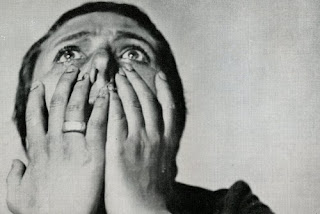
Many of the images in War Horse could be considered quite stirring once separated from the image stream. With all that money devoted to nothing other than a chance at effecting you on an emotional level, it's bound to work at least half the time. The other half is layered with an insulting "musical score as emotional guideline" that serves as nothing more than clarifying the clear. The score squanders any good will the images earn by over defining them. Had they been silent the images would have opened themselves to multiplicity, due to their ambiguity of emotion an intent.
In place of aesthetic evolution, is 3-D.
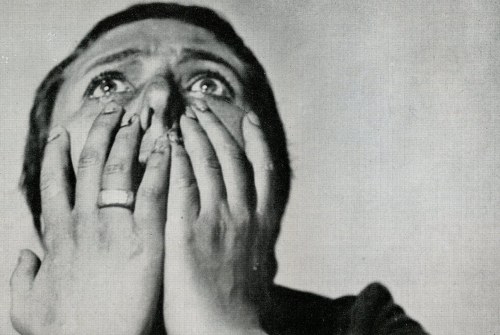
Sunday, February 12, 2012
Images of Horses in Film
War Horse is an emotional epic directed by "the only filmmaker that most Americans can name off the top of their heads."

There are, generally speaking, three types of war films:
1. Films made by those who fought in a war first hand
2. Films made by those who were raised by family members with first hand experience
3. Films made by those who experienced war through war films
Steven Spielberg, philosophically, falls into the third category. His treatment of war is time and time again, both humanistic and morally centered. It represents the type of fighting and dying we want to believe exists in the physical world. The result is a clean (even when filthy), cinematic, battle between sound and image with human characters trapped somewhere in the middle. His camera, being decidedly dramatic (in the Bordwell sense), is capable of achieving any angle imaginable without regard for physical space or character perspective. Thus it's easy to infer that Spielberg's interests are not with the moral ambiguity of killing for ones ideals, but more with the mise en scene of battle. War for Spielberg works as a backdrop, and one that does most of the emotional legwork for the filmmaker, as an audience member will inherently bring with them one (or perhaps all) of the three perceptions of war.
The film looks and sounds like an important cultural artifact, and so, coupled with its pedigree most people (seemingly the Academy included) will treat it as such. They know what to feel before the lights even dim; they are simply waiting for proper cues. And in terms of utilizing cinematic discourse as a cue for emotion, in lieu of any actual emotion War Horse succeeds. In short: Spielberg knows how movies are made, and as such War Horse is the cinematic equivalent of putting together a puzzel of a flower, rather than growing one yourself. At its core, War Horse is a "film as John Ford workshop" for Spielberg, but what he has neglected to include is the emotional build that motivated Ford's aesthetics.
What is interesting about the film is that it operates around a character (Joey...a horse) without a sense of ethics. Joey simply moves through spaces, occasionally stopping to stare blankly back at the ancillary characters that are constantly risking their lives for him. Joey is the reason for the narrative, but never its cause. In a sense he is utilized in the same manner that early Hong Kong films were accused of utilizing female characters. He is a pretty thing meant to stand, back lit by a blood red sunset, while he is photographed from the most pleasing angle possible until he is to be placed in danger.
Monday, February 6, 2012
Letter to the Microcosm
Super8/16mm film has been co-opted by the DSLR reactionalists, and now what we are beginning to realize, much as we did when High Definition became second nature, is that a film cannot impress us simply because it was shot onto celluloid. It has to have some depth and sincerity. I believe we are reaching the high water mark of surface reaction to these new/old aesthetics, and I hope that instead of searching for a new surface, we begin to think introspectively and let what we find inform our choices. For too long we have been doing to opposite.
-Daniel Watkins
-Daniel Watkins
Friday, January 13, 2012
Our Two Narratives
Narratives shaped by personal experience, and narratives shaped by cinematic experience. The personal experiences are those that we project onto the cinema, the cinematic are those projected (literally) back on to us. It is in this narrative reverberation that we develop societal identity, and it is this identity that makes micro-tragedy possible.
A micro-tragic structure is comprised of inconsequential moments that are not necessarily tragic in and of themselves, but rather allude to a much larger, unseen tragedy. This “implied tragedy” is suggested as much by what is presented to the viewer as it is by the narratives that already exist within the collective unconscious of the audience as a whole.
Monday, August 1, 2011
Empirical Cinema Theory
Apparatus theory teaches us that the cinema is inherently ideological because, despite the fact that the camera captures objectively, what it is capturing is subjected to the personal beliefs, sensibilities, and aesthetics of its operator. Post-production is subjected in a similar fashion.
Additionally, the cinema is, unlike any other art form, produced and controlled almost exclusively, by large businesses operating under an industrial model. This is because cinema is by far and away the most accessible as well as commercially viable art form in the developed world. It is through these avenues that we ultimately find ourselves (the cinematic consumer) bombarded with the ideology of the "ruling class." Any accessible cinematic representation of the "working class" (henceforth referred to as the "proletariat") is through the lens of the aristocracy, and as such, is inherently false (and often patronizing).
However, more often the cinema offers us the objects of our desire: fast cars, beautiful women, and adventure. The latter two distract us from our economic purgatory, while the former gives us incentive to resume uninterrupted toiling; the fast car being our reward.
Films like Transformers and those of a similar ilk are sociologically toxic, because they project onto us a series of distractions, while we simultaneously project out desires back on to the image. A sort of invisible superimposition that feeds off the capital of the proletariat while it distracts them from their reality. They are left poorer and with nothing gained.
However, I would be remis if I didn't acknowledge the importance of a distraction. It is when distractions become the norm that such a cinema becomes dangerous.
Through the lens of the bourgeois women in film are merely observed, and never outside the context of the hero's gaze. They are as Laura Mulvey stated "the reason for his movement, but never his cause." In bourgeois cinema a female audience member is forced to view a film from one of two perspectives: One is that of the objectified heroine, the other is that of the hero. When taking the latter she is choosing the more cinematically dominant perspective and in doing so is opting to strip herself of her gender, rendering her yet another proletariat consumer. In choosing the former she can become aware of her objectification. From this perspective she can then travel two more paths: one is a complacency with said objectification or perhaps even less than that, a dismissal of such. An unconscious resignation of one's self to a second tier existence, cinematically speaking. The second path is to rally against that existence by creating a counter-cinema; one in opposition to the gaze of the bourgeois.
Until the cinematic revolution,
D

Additionally, the cinema is, unlike any other art form, produced and controlled almost exclusively, by large businesses operating under an industrial model. This is because cinema is by far and away the most accessible as well as commercially viable art form in the developed world. It is through these avenues that we ultimately find ourselves (the cinematic consumer) bombarded with the ideology of the "ruling class." Any accessible cinematic representation of the "working class" (henceforth referred to as the "proletariat") is through the lens of the aristocracy, and as such, is inherently false (and often patronizing).
However, more often the cinema offers us the objects of our desire: fast cars, beautiful women, and adventure. The latter two distract us from our economic purgatory, while the former gives us incentive to resume uninterrupted toiling; the fast car being our reward.
Films like Transformers and those of a similar ilk are sociologically toxic, because they project onto us a series of distractions, while we simultaneously project out desires back on to the image. A sort of invisible superimposition that feeds off the capital of the proletariat while it distracts them from their reality. They are left poorer and with nothing gained.
However, I would be remis if I didn't acknowledge the importance of a distraction. It is when distractions become the norm that such a cinema becomes dangerous.
Through the lens of the bourgeois women in film are merely observed, and never outside the context of the hero's gaze. They are as Laura Mulvey stated "the reason for his movement, but never his cause." In bourgeois cinema a female audience member is forced to view a film from one of two perspectives: One is that of the objectified heroine, the other is that of the hero. When taking the latter she is choosing the more cinematically dominant perspective and in doing so is opting to strip herself of her gender, rendering her yet another proletariat consumer. In choosing the former she can become aware of her objectification. From this perspective she can then travel two more paths: one is a complacency with said objectification or perhaps even less than that, a dismissal of such. An unconscious resignation of one's self to a second tier existence, cinematically speaking. The second path is to rally against that existence by creating a counter-cinema; one in opposition to the gaze of the bourgeois.
Until the cinematic revolution,
D

Wednesday, June 22, 2011
On Language
Landscapes: The Wideshot
Landscapes at their best should be as tracking shots. The viewer's eye the camera -- moving from one point of emphasis to another, unable to grasp the composition as a whole with one simple glance. By doing this you are introducing time to what was simply space.


Landscapes at their best should be as tracking shots. The viewer's eye the camera -- moving from one point of emphasis to another, unable to grasp the composition as a whole with one simple glance. By doing this you are introducing time to what was simply space.

View of Toledo in a Storm, 1600/1610 by El Greco

The Shining, 1980 by Stanley Kubrick
Saturday, June 11, 2011
Legacies

TRON: Legacy (2010)
Last year's TRON: Legacy marked a large step in our cinematic culture. It signified a loss of reverence for the images of the Hollywood vernacular. The question no longer concerns the ethics of exploring the boundaries outside the frame, but rather the boundaries of life and death (time and space) as they exist in the lexicon of our language of images.
We as filmmakers and as a culture have long since been able to see anything we want on screen. Any desire we wish to project can indeed be projected in light and shadows. What has stopped us from exploiting our seemingly limitless grasp of the computer generated image is an arbitrary sense of reverence; an ethical barrier that has, for instance, prevented us from remaking Gone With The Wind in glorious high definition with a cast of computer generated dead celebrities. These images are deified through memory. A fourth generation nostalgia attached to a period in time and a sense of aesthetics.
TRON: Legacy is a step in the right direction. A film that, without remorse, has resurrected a person that existed in a series of finite spaces (frames), and ceases to exist today outside of memory (however repeatable those frames may be). The Jeff Bridges of the past is pit in a duel against his present self, a self that now preserved ceases to age. A battle between a memory and a memory of a memory; essentially a mirror of Hollywood's duel of ethics. The comfort found in the inevitability of aging in our Hollywood relics ("the ethical") vs. the possibility of an ageless, imortal movie star ("the unethical"). The cinema has allowed us to defy the laws of nature, but we are now allowing ourselves to defy our misplaced sense of ethics concerning a reverence for the antiquated. Unwritten guidelines rooted in an invented nostalgia.
When we lose this reverence for the image we can break the image; opening it to deconstruction. The creation of a 'cinema of paradox.' Real/synthetic, aging/ageless, mortal/imortal, etc. Images that at one point existed simply as images (juste une image) now contain an inherent plurality, because of the paradoxes they suggest (une image juste). The cinema in coming years will find itself as a reference point for intersecting histories. A visual accumulation of all that preceded it, as well as the memories and nostalgia, invented or otherwise, that an audience will unwittingly project back towards the screen. The culmination of which is memory projected onto its signifier.
Sunday, May 1, 2011
On language
Shot Reverse Shot
(Some Like It Hot, 1959)

Shot Reverse Shot
Establishing an object in a finite space. Establishing an object in an implied space and
The movement of the subject and time based on the image that preceded it. In
The movement of the subject and time based on the image that preceded it. In
the camera suggest time. reality both space and time are discontinuous
in the service of creating the feel of a
continuous reality. Students of Méliès, more
so than human nature.
Sunday, April 24, 2011
In Review
A collection of notes from my notebook about films I saw once.
World's Greatest Dad (2009)
 Bobcat Goldthwait is a filmmaker interested in asking questions both consequential and otherwise. 2006's Sleeping Dog's Lie asks the latter. World's Greatest Dad however tackles something very large and universal. The idea of creating histories, which suggests, more importantly the existence of multiple histories. Goldthwait acknowledges that history belongs to time not simply to a finite space; that it is ever evolving; that our histories belong to a larger social discourse.
From there he goes on to discuss the ways in which society will ultimately fetishize that history, which delivers it all the more to discourse, all the more to time, because we attach ourselves to objects from that history based on an arbitrary worth tied to nothing more than a sense of belonging. A moment is finite, a moment remembered, or more specifically a moment tied to an object is infinite.
Where Mr. Bobcat fails is in his attempt to fit his grand ideas into a plausible narrative language. So much in the film happens simply because it has to. The words in 'Kyle's' 'diary' effect society so deeply, not because they are beautiful, but rather because they need to in order for the plot to continue. Lance's confession occurs because the film needs to come in at ninety minutes, not because what we have seen up to that point had been building (psychologically or otherwise) to necessary catharsis. Goldthwait know his cinema history. He knows that films in which a character holds a deep dark secret must ultimately end in a confession, and so he ends him film as such, but does so without emotional context.
What ultimately ends up on screen are many thoughtful ideas, but ideas in the hands of a filmmaker not yet capable of adequately translating them.
World's Greatest Dad (2009)

From there he goes on to discuss the ways in which society will ultimately fetishize that history, which delivers it all the more to discourse, all the more to time, because we attach ourselves to objects from that history based on an arbitrary worth tied to nothing more than a sense of belonging. A moment is finite, a moment remembered, or more specifically a moment tied to an object is infinite.
Where Mr. Bobcat fails is in his attempt to fit his grand ideas into a plausible narrative language. So much in the film happens simply because it has to. The words in 'Kyle's' 'diary' effect society so deeply, not because they are beautiful, but rather because they need to in order for the plot to continue. Lance's confession occurs because the film needs to come in at ninety minutes, not because what we have seen up to that point had been building (psychologically or otherwise) to necessary catharsis. Goldthwait know his cinema history. He knows that films in which a character holds a deep dark secret must ultimately end in a confession, and so he ends him film as such, but does so without emotional context.
What ultimately ends up on screen are many thoughtful ideas, but ideas in the hands of a filmmaker not yet capable of adequately translating them.
Sunday, April 17, 2011
Setups and Payoffs
Cease to look for payoffs and you free yourself from the language of traditional cinema and open your film to multiplicity and plurality.

Pierrot le fou (1965)

Leprechaun (1993)
In 1993's Leprechaun directed by Mark Jones, mentally handicapped Ozzie inadvertently has his face painted blue, in what is surely the setup for some ensuing hilarity (not that the moment in and of itself isn't 'gaggy'). However as the film progresses that payoff never materializes. Thus, in retrospect, nor did a setup. No cause without effect.
This as a result brings to mind a question of authorial intent, and without much delving into the visual history of the cinema it is clear that the physicality and combination of colors are a direct intertextual reference to Jean-luc Godard's Pierrot le fou. This recontextualization of image ironically (or perhaps not so) evokes the notion of juste une image/ une image juste, a concept coined by Godard.
Seemingly every other image in Jones' film could be describes as juste une image, simply an image in a long 'image stream' meant only to give way to new images. All fitting neatly into a coherent cinematic language. A language that presents itself as a realistic continuation of time and space, but is in fact a fallacy.
With une image juste an image is, in addition serving a function within a film, an allusion to a larger context; what Michel Foucault described as "a node within a network." This particular image in Jones' film exists both within the film, but also within a larger social and cinematic discourse, and as a result opens itself up to a plurality. It contains narrative meaning in Leprechaun, but also pulls into itself all meaning derived from Godard's image as well as any emotions and personal history the audience has with said image. It renders the cinematic image into a photographic one. An image unto itself, removed from time, or perhaps more specifically the rapid succession of images.
Mark Jones deserves credit for creating an image that not only gives way to more images, but also allows us to project our own subjective meaning onto the projected image. The significance of this scene therefore exists more in the space between the projector and the screen. The space occupied by a beam of light, dust and a multitude of personal narratives.
Pierrot le fou is the set up to Leprechaun's payoff within the context of Leprechaun's image stream.
Saturday, March 12, 2011
'No Greater Love' in Miami
This past weekend I attended The John Paul II Film Festival in Miami. Out of my 'wheel house' to say the least.
The first film I caught was Michael Whyte's No Greater Love which is a documentary in (nearly) the purest sense of the word, that (observes more than) follows a convent of nuns in Britain's Notting Hill. The sisters, who have taken a vow of almost complete silence, move through the monotony of their day to day routine as the camera merely observes with an impartial reverence not necessarily for the work they do, but for the methodical mechanics of their bodies. We watch in long, unedited durations, as hands make communion wafers, backs ring bells, and throats swallow food. Each frame is full of movement, and sound wether or not the camera reframes or the sisters speak.
Additionally, very little judgment is made in terms of the importance of one event over another. Whyte photographs (in what Bordwell may refer to as a 'narrative' style) the funeral of an elder nun the same way in which he presents the gardening of green beans. In doing this Whyte plays with our conditioned sense of narrative rhythm, which in turn creates a film that is, much like life, constantly poised on the verge of climax. With a camera that judges all equally, any emotional resonance is purely subjective. If the film does indeed climax, in the traditional sense of the word, it is because of your own personal narrative, not through any manipulation of montage and song. This technique is indicative of a courageous fimmaker who has not yet given up on his audience. A filmmaker not in love with God, but in love with images.
The combination of Whyte's 'narrative' framing and the tenants inherent to documentary itself bring to mind the notion of pure cinema, or at least something very close to pure cinema. However, at the same time there exists an ever present awareness of the camera (e.g. zooms, visible editing), which then evokes the notion of selective framing, micro/macro-editing, etc. What this film ultimately does is remind us of the impossibility of a pure cinema.
The last film I was able to see was St. Bernadette of Lourdes. It is a re-telling of the story of St. Bernadette with an all child cast as if it were a elementary school play. The only reason I mention this film has to do with the extremely 'digital' look of its cinematography. When most are asked to picture the Virgin Mary the first thing that comes to mind is usually an artist's rendering from a painting, a statue, stained glass window, etc., but in St. Bernadette we are given a depiction of Mary in a purely modern medium; digital high definition. Though I know I am giving this film a bit too much credit, it has, for some at least (mainly the scores of children present at the screening), re-contextualized the way they view religious imagery; casting a very modern gaze on something so steeped in antiquity. Wether or not this choice was motivated artistically or economically is ultimately irrelevant.
The first film I caught was Michael Whyte's No Greater Love which is a documentary in (nearly) the purest sense of the word, that (observes more than) follows a convent of nuns in Britain's Notting Hill. The sisters, who have taken a vow of almost complete silence, move through the monotony of their day to day routine as the camera merely observes with an impartial reverence not necessarily for the work they do, but for the methodical mechanics of their bodies. We watch in long, unedited durations, as hands make communion wafers, backs ring bells, and throats swallow food. Each frame is full of movement, and sound wether or not the camera reframes or the sisters speak.
Additionally, very little judgment is made in terms of the importance of one event over another. Whyte photographs (in what Bordwell may refer to as a 'narrative' style) the funeral of an elder nun the same way in which he presents the gardening of green beans. In doing this Whyte plays with our conditioned sense of narrative rhythm, which in turn creates a film that is, much like life, constantly poised on the verge of climax. With a camera that judges all equally, any emotional resonance is purely subjective. If the film does indeed climax, in the traditional sense of the word, it is because of your own personal narrative, not through any manipulation of montage and song. This technique is indicative of a courageous fimmaker who has not yet given up on his audience. A filmmaker not in love with God, but in love with images.
The combination of Whyte's 'narrative' framing and the tenants inherent to documentary itself bring to mind the notion of pure cinema, or at least something very close to pure cinema. However, at the same time there exists an ever present awareness of the camera (e.g. zooms, visible editing), which then evokes the notion of selective framing, micro/macro-editing, etc. What this film ultimately does is remind us of the impossibility of a pure cinema.
The last film I was able to see was St. Bernadette of Lourdes. It is a re-telling of the story of St. Bernadette with an all child cast as if it were a elementary school play. The only reason I mention this film has to do with the extremely 'digital' look of its cinematography. When most are asked to picture the Virgin Mary the first thing that comes to mind is usually an artist's rendering from a painting, a statue, stained glass window, etc., but in St. Bernadette we are given a depiction of Mary in a purely modern medium; digital high definition. Though I know I am giving this film a bit too much credit, it has, for some at least (mainly the scores of children present at the screening), re-contextualized the way they view religious imagery; casting a very modern gaze on something so steeped in antiquity. Wether or not this choice was motivated artistically or economically is ultimately irrelevant.
Sunday, September 12, 2010
Carney via Matisse
Yesterday I visited the MoMA for the first time, which happened to coincide with a traveling exhibit of various paintings and sculptures by Henri Matisse.
Having never really taken the time to study Matisse in my life leading up to this visit, I found myself forced to glean talking points from sparse texts and conversations between roaming art teachers and their husbands. What I, potentially incorrectly, overheard is that the focus of Matisse's early period concerned itself with breaking down the human form into basic, thick, deliberate lines and colors.
Application:
Parring film down to its 'essential elements' (space, light, time, etc...) and then building onto these elements interactions between people and other people as well as people and their environment, without building those interactions towards a narrative climax brings us closer to what Ray Carney describes as pragmatic art, an art that finds its value in the mundanity and repetition of daily living.
Er go, seemingly the only way to achieve a pure pragmatic form is to strip film of its defined narrative grammar. A film constantly poised on the edge of conclusion (much like life) without climax is the closest we can come to a sincere form, as it does little to manipulate what already exists within the confines of that existence.
Having never really taken the time to study Matisse in my life leading up to this visit, I found myself forced to glean talking points from sparse texts and conversations between roaming art teachers and their husbands. What I, potentially incorrectly, overheard is that the focus of Matisse's early period concerned itself with breaking down the human form into basic, thick, deliberate lines and colors.
Application:
Parring film down to its 'essential elements' (space, light, time, etc...) and then building onto these elements interactions between people and other people as well as people and their environment, without building those interactions towards a narrative climax brings us closer to what Ray Carney describes as pragmatic art, an art that finds its value in the mundanity and repetition of daily living.
Er go, seemingly the only way to achieve a pure pragmatic form is to strip film of its defined narrative grammar. A film constantly poised on the edge of conclusion (much like life) without climax is the closest we can come to a sincere form, as it does little to manipulate what already exists within the confines of that existence.
Tuesday, August 31, 2010
The Orpheus Complex (a one night thesis)
All filmmakers are in a since victims of an 'Orpheus complex' in that they are constantly attempting 'return to life' moments, feelings and/or people which have passed. The fallacy of this being that once an image is recorded it has passed. Thus filmmakers are for the most part 'chasing their own tails (tales)' in a vain effort to mummify constant death. Death, not only of the moment that is being reenacted, but also the death of the act of reenactment which, in a since, is dying as it is being recorded.
Filmmakers tend to find comfort in reenactment, however a reenactment that attempts to deceive itself as well as its audience into buying the illusion of a 'first time' represent for me the biggest misunderstanding of the filmmaking process. A film that refuses to acknowledge its deception is akin to a painting that sells itself as a window. In such presentation their is no room for respect for one's audience. Many filmmakers are all too willing to speak on the deception of sunlight, moonlight, explosion, etc., but rarely, within the context of narrative is the deception of a 'first time' ever addressed. However, it is this deception that I find to be most intriguing. It comes from something ingrained into many of us from an early age. The urge to recreate, to see a flower and then attempt to draw that flower. What differentiates that sort of recreation and a cinematic one is the suspension of disbelief.
We see Russel Crowe as James Braddock, and are expected to believe we are seeing James Braddock - back from the dead via movie magic. In contrast, in the Todd Haynes film I'm Not There, at no point are we expected to believe that Richard Gere is Bob Dylan.
Here Haynes is an example of a filmmaker that is not only aware of the deception, but one that has chosen to incorporate it.
The burden of creation is a misnomer, as it is plain to see that it is the burden of recreation that compels us. What films like I'm Not There and Chronik der Anna Magdalena Bach by Jean-Marie Straub and Dani
Huillet teach us is the possibility of a reconciliation of Orpheus and a rejection of deception. A recreation by self-aware re-creators.
Filmmakers tend to find comfort in reenactment, however a reenactment that attempts to deceive itself as well as its audience into buying the illusion of a 'first time' represent for me the biggest misunderstanding of the filmmaking process. A film that refuses to acknowledge its deception is akin to a painting that sells itself as a window. In such presentation their is no room for respect for one's audience. Many filmmakers are all too willing to speak on the deception of sunlight, moonlight, explosion, etc., but rarely, within the context of narrative is the deception of a 'first time' ever addressed. However, it is this deception that I find to be most intriguing. It comes from something ingrained into many of us from an early age. The urge to recreate, to see a flower and then attempt to draw that flower. What differentiates that sort of recreation and a cinematic one is the suspension of disbelief.
We see Russel Crowe as James Braddock, and are expected to believe we are seeing James Braddock - back from the dead via movie magic. In contrast, in the Todd Haynes film I'm Not There, at no point are we expected to believe that Richard Gere is Bob Dylan.
Here Haynes is an example of a filmmaker that is not only aware of the deception, but one that has chosen to incorporate it.
The burden of creation is a misnomer, as it is plain to see that it is the burden of recreation that compels us. What films like I'm Not There and Chronik der Anna Magdalena Bach by Jean-Marie Straub and Dani
Huillet teach us is the possibility of a reconciliation of Orpheus and a rejection of deception. A recreation by self-aware re-creators.
Thursday, August 26, 2010
Woody Allen's Whatever Works: Juggling Artifice and Intimacy
I'm not entirely sure what provoked me to write about this film. After my initial viewing, it was not difficult to
see how many wrote this film off just as they've written off most of Allen's recent comedic endeavors.
However, as the months wore on, I couldn't help but revisit this particular film. Not because it was particularly good, but because there was something unspoken in the presentation that lent itself to a discussion on the context of intimacy on screen.
Woody Allen once stated that “my one regret in life is that I am not someone else.” Whatever Works finds Allen once again in his familiar New York City allowing just that to take place. Larry David takes over the Woody Allen character as Boris Yelnikoff, a neurotic, misanthropic genius, who, since a failed suicide attempt, has sequestered himself off from the majority of human contact. Boris now spends his days hobbling around Little Italy, eating with the only two friends he has left, and criticizing the intellectual integrity of almost everyone he meets.
see how many wrote this film off just as they've written off most of Allen's recent comedic endeavors.
However, as the months wore on, I couldn't help but revisit this particular film. Not because it was particularly good, but because there was something unspoken in the presentation that lent itself to a discussion on the context of intimacy on screen.
Woody Allen once stated that “my one regret in life is that I am not someone else.” Whatever Works finds Allen once again in his familiar New York City allowing just that to take place. Larry David takes over the Woody Allen character as Boris Yelnikoff, a neurotic, misanthropic genius, who, since a failed suicide attempt, has sequestered himself off from the majority of human contact. Boris now spends his days hobbling around Little Italy, eating with the only two friends he has left, and criticizing the intellectual integrity of almost everyone he meets.
- Years pass when Boris, now content with his reclusive lifestyle, arrives home to findMelody (Evan Rachel Wood), a twenty one year old woman from Mississippi, lying in the gutter by his doorstep. After much pleading Boris reluctantly allows Melody in for a meal and a warm place to sleep. One night turns into two, acquaintances become lovers and soon Boris has himself a live-in girlfriend. Melody, being Boris intellectual inferior begins to take on his cynical world view and, in a page right out of Chekov's The Darling, slowly loses sight of the uncorrupted southern belle she once was.
- Ultimately, that is what Allen's film is about: his beloved New York's ability to change people into a side of themselves they have suppressed their entire lifetime. A revelation of true-self catalyzed by environment. Such is evident when both Melody's mother and father arrive to 'save her' only to find themselves seduced by 'blue-state' intellectualism, art and sexuality.Though, Melody ultimately leaves Boris for greener, less misanthropic pastures, our hate-able protagonist still manages to find love after a second suicide attempt finds him flying out of his window and on to the girl of his dreams.
- Though a well worn message to be sure, one expects that in the hands of a proven filmmaker such as Woody Allen, the emotional transitions wouldn't be treated as flippantly as they are. What is presented is almost a revelatory assembly line. Characters enter, their lives are changed, they move on. It isn't long before this formula digresses into tedium. In terms of performance, David is spectacularly scathing as Boris, so much so in fact, that at times it feels as if Allen's own return to the city has somehow revealed a side of himself he had hereto kept from the cinematic arena. Boris expounds in long hateful diatribes which, amusing at first, soon begin to make one feel a bit uneasy. Is this how Allen views the rest of the world? Maybe, maybe not; as Boris' character is written and subsequently acted in such an 'over the top' manner that it is hard to truly take anything he says seriously. The same, however, goes for the rest of the film as well.
- In Whatever Works, Allen makes no attempt to hide the artifice of his medium. David often finds himself directly addressing the audience, ranting on topics from anthropology to politics, and at times, almost expecting a response. This however, is only the beginning as the rest of the characters that Allen chooses to populate his world have such an inherent theatricality to them that by the closing credits you almost expect a curtain call. Both Melody's mother and father, played respectively by Patricia Clarkson and Ed Begley Jr., are written as caricatures. An inadvertent political commentary on how a seemingly out of touch New York intellectual may view his mid-western brethren.
- Even Boris' apartment never feels like a home, so much as it does an elaborate, meticulously designed set piece. Everything from the lighting to the camera placement serve to suggest a much larger arena outside the performance space. The result finds the actors (whom are viewed as such far more so than they are as 'characters') sharing screen time with the performances occurring behind the camera.
- Such theatricality is amusing, but at times slightly off-putting. Allen keeps the audience at arms length, never making them a part of the world, but more an observer (much like Boris himself). An approach to filmmaking such as this would come off as frustrating, or perhaps even unintentionally sloppy if Allen didn't make his intentions abundantly clear in the first scene of the film. From Boris' first direct address the viewer is made aware of themselves as an audience, and thus a separation between our world and the world on screen is established. A technique such as this is somewhat refreshing in a cinematic landscape that is often, with improvements in 3-D technology, quite literally trying to bring us into the world on screen.
- However, and quite unfortunately this style of presentation works against the moments in the film in which Allen aims to create a feeling of genuine intimacy. What results are intimate moments that are never feel truly intimate, because all the moments preceding them serve to remind the viewer that they are sharing the experience with everyone else in the room, as well as those behind the camera working to capture the experience, collectively 'the audience.' Here Allen walks a fine line; attempting to balance the artifice inherent to the theatricality of his presentation and the love he clearly feels for the characters he has written. It is in this attempted balance that the film truly fails. Unable to reconcile these two aspects of his film, Allen ultimately produces a piece that is tonally and emotionally inconsistent, leaving the audience with an unsatisfying, hollow experience. Artifice without commentary, and intimacy against the backdrop of artifice.

Subscribe to:
Posts (Atom)